
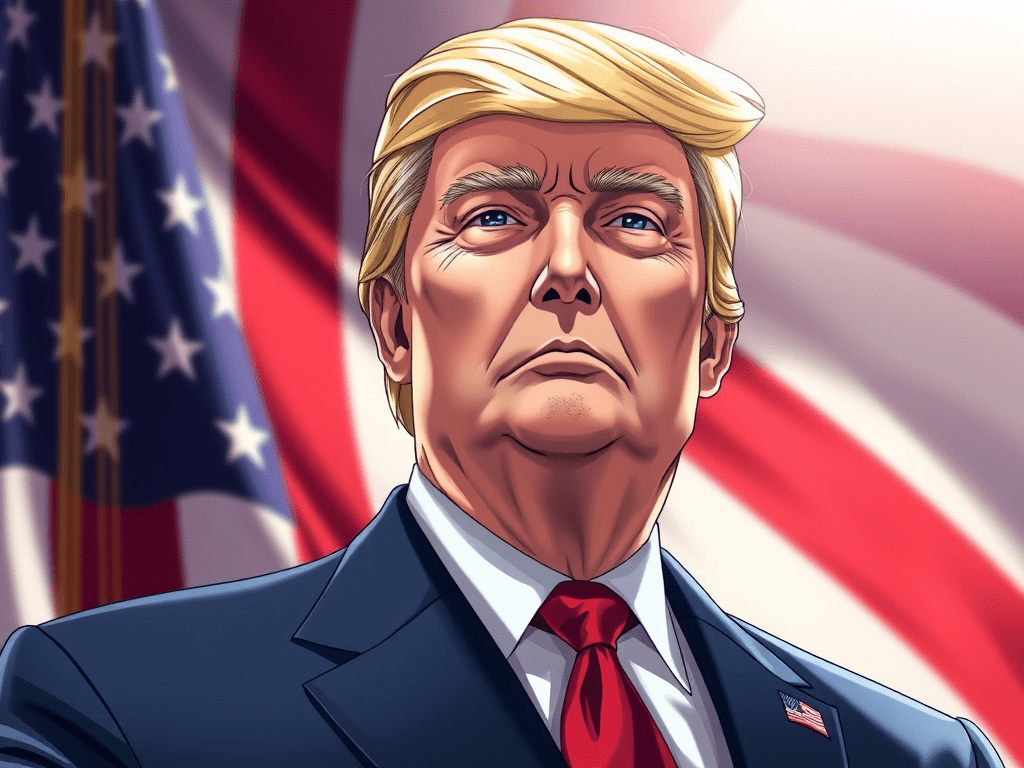
Nobody against nobody
Is it the eradication of drug use what Trump and the United States wish to happen? An impossible dream.
The industry of the illicit drug consumption is more palpable nowadays than in the last fifty-five years of attempting under several political administrations worldwide. For this article, specifically in the United States and Colombia.
No matter which administration you try to compare or judge, the approach and results have always been equivocated.
First, because the methodologies used to attack and eliminate heads of the cartels have produced wrong results to a level of micromanagement representing more cartels with whom to deal, and secondly, the consumption nor the cultivating has not decreased. On the contrary, analyzing production from the eighties to 2025, it has increased in Colombia, which as the top producer, accounted for 253,000 hectares of coca crops in 2023, which represents 67% of the total globally. It means that it was a 10% growth from 2022 and the tenth consecutive year of growth for the country.
Now, my question to the US Embassy in Bogota, the US Army, DEA stationed in the same embassy is, with all the radars, drones, DEA and military personnel, military monetary aid to the Colombian regime in turn, why is it that no justifiable control exists?
Continuing with my questioning, which type of control are they trying to exercise? The guerrillas? The US know well they are in control of the plantations and internal traffic. Bottom line is that politicians, financers, and government officials want to control the monstrously fluid cash originating in the black market. But it is a nightmare, too many uncontrollable hands. The only viable road to consider now is the legalization. A sentiment shared by many at any levels of intelligence.
To extend my own response considering those questions to the United States representatives, I confess that I do not ask the same questions to the Colombian government, since the answers are very conclusive by the many legal cases against militaries; the majority of those funds end in their hands.
Colombian bureaucracy is not interested in a status quo change. Furthermore, I will include the name of three individuals (I imagine they have them under vigilance,) Felipe Harman, the Director of the Agencia Nacional de Tierras, and Martha Carvajalino, the Minister of Agriculture. They have a Judge in the background who will protect them in case needed, Vladimir Fernández de la Corte Constitutional.
The first two, who are under criminal investigation – including one I initiated – are appropriating lands under whichever illegal method they can use with Petro help. The US Embassy in Bogota, the DEA and the US military headquarters in Bogota must keep an eye on the three elements I mentioned in the previous paragraph. They certainly have an agenda.
Realistically speaking, establishing control of the cocaine trade is unrealizable, an impossibility, not for Trump and the United States, not to the Colombian Government, and as a matter of fact, not to anyone in the world.
The black market for cocaine is a multi-billion-dollar illicit industry driven by sophisticated transnational criminal organizations, has recently surged to record-breaking levels of production and consumption, fueling extreme violence, corruption, and social instability worldwide.
The structure of the black market operates through a complex, global supply chain with key stages from production to consumption.
The United Nations reported that in 2023, global cocaine production reached a record high of over 3,700 tons, largely driven by a significant increase in coca cultivation in Colombia.
The most common method for large-scale shipments is maritime smuggling, techniques including “narco-submarines” and “torpedoes,” as well as concealing drugs in legal cargo like fruit, lumber, and other products. Perhaps this justifies the recent attacks near Venezuela.
Land routes, air transportation, darknet markets have been, still are other systems used to transport it globally, and it will never end.
Analyzing distribution, we encountered is managed by criminal organizations in Mexico, Italy and Colombia by the guerrillas, local gangs, including all type of drugs, because the mentality evolves as the controlling of the flow.
The enormous profits generated by the cocaine trade must be laundered to disguise their illegal origins. How is Trump to monitor the copious amounts of cash that are physically smuggled out of major consumer markets, such as the United States, back to source and intermediate locations? Or how someone else is going to replace the systems already in place?
Traffickers exploit banks and other financial services to deposit and transfer illegal funds, the trade-based laundering systems like the Black-Market Peso Exchange (BMPE) who allow traffickers to exchange drug money for local currency through international trade, facilitating tax evasion for corrupt businesses?
Online gaming, digital currencies, and mobile payments present new challenges for law enforcement, as they can be used for financial transactions with greater anonymity? Could this system be replaced?
Or the use of legitimate businesses criminals who frequently use seemingly legitimate businesses, such as a cannery or electronics store, to process and hide drug money?
Consequences of the black market for cocaine have a severe and wide-ranging impact, like violence and crime, brought by drug cartels using extremism to protect their operations, eliminating rivals, leading to high homicide rates in various affected regions worldwide. Drug users may also commit crimes to fund their addiction.
Massive profits enable traffickers to corrupt government officials, law enforcement, and businesses, undermining the rule of law and political stability.
Availability and potency of cocaine contribute to addiction, overdoses, and related health issues. The growing market can also lead to the spread of diseases.
Drug trade diverts resources from legitimate industries and placing a heavy burden on healthcare, criminal justice systems, and lost productivity. The U.S. economy alone faces trillions of dollars in annual costs related to drug abuse.
And there are many more reasons as to why the system in place has failed from any angle is seen.
The “war on drugs” has been ongoing since at least June 17, 1971, and has lasted for over 54 years. The term refers to a global effort, primarily led by the United States, to reduce the production, distribution, and use of illicit drugs, though its effectiveness is widely debated.
The term was popularized in the early 1970s, specifically during the Nixon administration, which declared a “war on drugs” in 1971.
As of October 20, 2025, the campaign has been active for 54 years, 8 months, and 5 days. The effort is still ongoing, though it is widely viewed as a policy failure.
Analyzing briefly and comparing it to the legalization of alcohol in the United States after national prohibition, it took 13 years from the start in 1920 to its full repeal in 1933. The process of repeal began earlier in 1933 with the passage of the Cullen-Harrison Act legalizing low-alcohol beer and wine in March, followed by the full repeal of Prohibition through the 21st Amendment, which was ratified in December 1933.
The only alternative left is legalization of drugs, especially now with the aperture of distinct personalities governing Colombia and the United States. In one hand, Trump believe is the reincarnation of the new diabolic messiah for those who like me, do not believe in one good god but only the existence of the natural malign human component.
Additionally, he is secretly working on becoming a dictator by allying with militaries who can support him once the ones in place are removed by the Secretary of War, Pete Hegseth, who by the way, he does not want women serving in the military, gay people, and to enlist only the slim and “beautiful men.”
We have a saying in Spanish which translated into English sounds like “if the river sounds, is because is carrying stones.” I do not have a “gay radar,” but it sounds to me – especially when I see his face – is that he is a closeted one.
In the other hand, Petro, the maker of a new governing class outside the families who have been governing Colombia for a couple of centuries sitting on a desk without knowing which direction to take now. And precisely, this is the sentiment he needs to convey to bring to other governments like Mexico, Brazil, Peru, Ecuador, and the entire Central America governments to make an alliance of solidarity towards the necessary change in human evolution, legalizing drugs and opposing the dictatorship of Trump. Better now than when it would be too late.
Do not touch Maduro, leave him alone, and let Trump get distracted with him.
To me it is easy to predict what will happen to him. Remember Torrijos in Panama? No need to become a mind reader to vaticinate a similar result for Maduro.
My suggestion to Petro is to legalize drugs in Colombia, take control of the government for several years, forget the constitution, alienate with those who can help, and especially, make sure that your allies are well tied and strengthened with all branches of the military.
No wars, though, not even one of words.
 Mi Opinión
Leave a comment